


Lead Generation

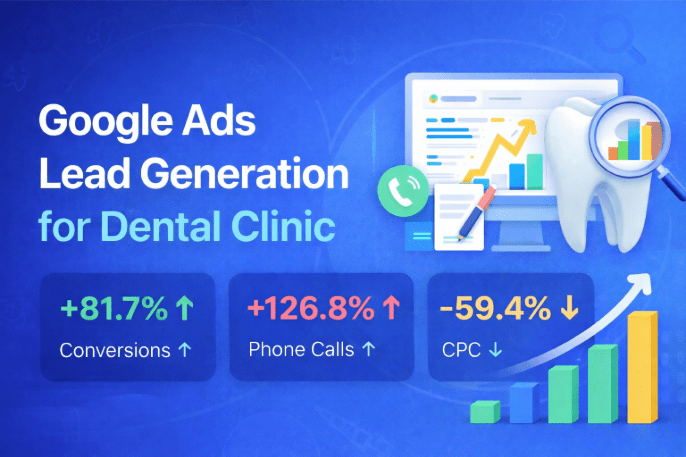
Google Ads for Dental Clinics – How to Get More Patients in 2026
Hello Doctor!If you’re here, you’re not just exploring Google Ads. You’re looking for real, result-driven Google Ads strategies to increase
Pay-Per-Click (PPC) advertising offers a powerful strategy for accelerating online business growth. If your goal is to expand your online store and boost sales, leveraging e-commerce PPC marketing can be a highly effective approach.
Did you know that 79% of brands believe PPC is a critical driver of their success? 80% of consumers prefer ads tailored to their city, zip code, and local surroundings. It’s no surprise that this method has gained such widespread popularity. PPC is more than just creating an online presence; it’s about reaching out to your target audience with the right message and effectively representing your items, which helps ecommerce brands generate immediate sales. In simple words, e-commerce PPC marketing can help you grow your business on a daily, weekly, monthly, or annual basis.
By 2026, e-commerce advertising will be more competitive and AI-driven than before. Online shopping is expanding rapidly around the world, with mobile commerce accounting for approximately 59% of total online retail sales as we approach 2026, and billions of customers increasingly shopping via smartphones and other devices.
At the same time, artificial intelligence (AI) is revolutionising PPC campaign execution and optimization. Today’s PPC platforms, such as Google Ads and Amazon Ads, rely more on machine learning to forecast user intent, optimise bids in real time, and automate campaign adjustments. According to industry data, about 75% of PPC marketing professionals leverage generative AI for ad creation, keyword research, and campaign insights – a trend that is only growing.
This indicates that by 2026, successful e-commerce PPC will require planning, AI monitoring, and data-driven judgments in addition to spending money. Platforms can produce graphics and copy for you, but the marketer must still understand how the AI model works, evaluate outputs, and analyze performance metrics to ensure campaigns are in line with company objectives. Finally, understanding AI effectiveness, rather than simply using it, will be a determining factor in e-commerce PPC success.
Isn’t it interesting? Let’s go deeper into how you can use PPC to increase your online sales and maximise your ROI! But if you’d prefer expert support, explore our E-commerce PPC management plans or get in touch with BeOnAds to begin your 7-Day Free E-commerce PPC Trial.
E-commerce is evolving at a rate we have never seen before. Customer behaviour, device purchases, and advertising channels are all undergoing rapid changes. What worked in PPC a few years ago is no longer effective today. To compete in 2026 and beyond, e-commerce companies must understand how technology, data, and artificial intelligence (AI) are transforming paid advertising.
Global eCommerce Annual Growth Estimate (2022–2025)
Let’s examine a simple example to better understand PPC.
Consider an internet store that sells pet supplies. The proprietor employs pay-per-click advertising to create fast revenues. They allocated a daily ad budget of $10 on Google Ads. When customers search for phrases like “buy dog food online” or “pet toys near me,” their ads appear.
If a $10 daily spend results in $500 in sales, it indicates that PPC generates high-intent customers who are actively looking to buy. This is the strength of pay-per-click advertising in e-commerce: you only pay when someone clicks, and each click has the potential to result in a sale.
When you compare PPC to traditional advertising, the most significant difference is how much you pay and how accurately you can target. PPC charges only when someone clicks on your ad. There are no significant upfront fees, unlike billboards, TV spots, or newspaper advertisements, which require payment in advance regardless of whether the audience responds. This makes PPC far more cost-effective for e-commerce businesses that want every dollar to go further.
While traditional advertising may appear enticing for increasing overall brand recognition, PPC regularly produces greater economic advantages for online shops. It’s extremely targeted, adaptable, and completely measurable. You may show advertisements exclusively to people who are actively searching for your products, set your daily budget, halt campaigns at any time, and monitor which ads create purchases.
PPC is perfect for generating immediate, qualified traffic, whether you’re launching a new product, testing an offer, or increasing sales with complete budget management. Traditional advertising, on the other hand, is better suited for broad brand recognition and mass reach, where exact tracking and performance evaluation are not the primary goals. For e-commerce growth, PPC provides speed, clarity, and a return on investment that traditional channels cannot match.

We help businesses scale smarter, faster, and profitably through strategic & data-driven advertising across the world’s biggest platforms.


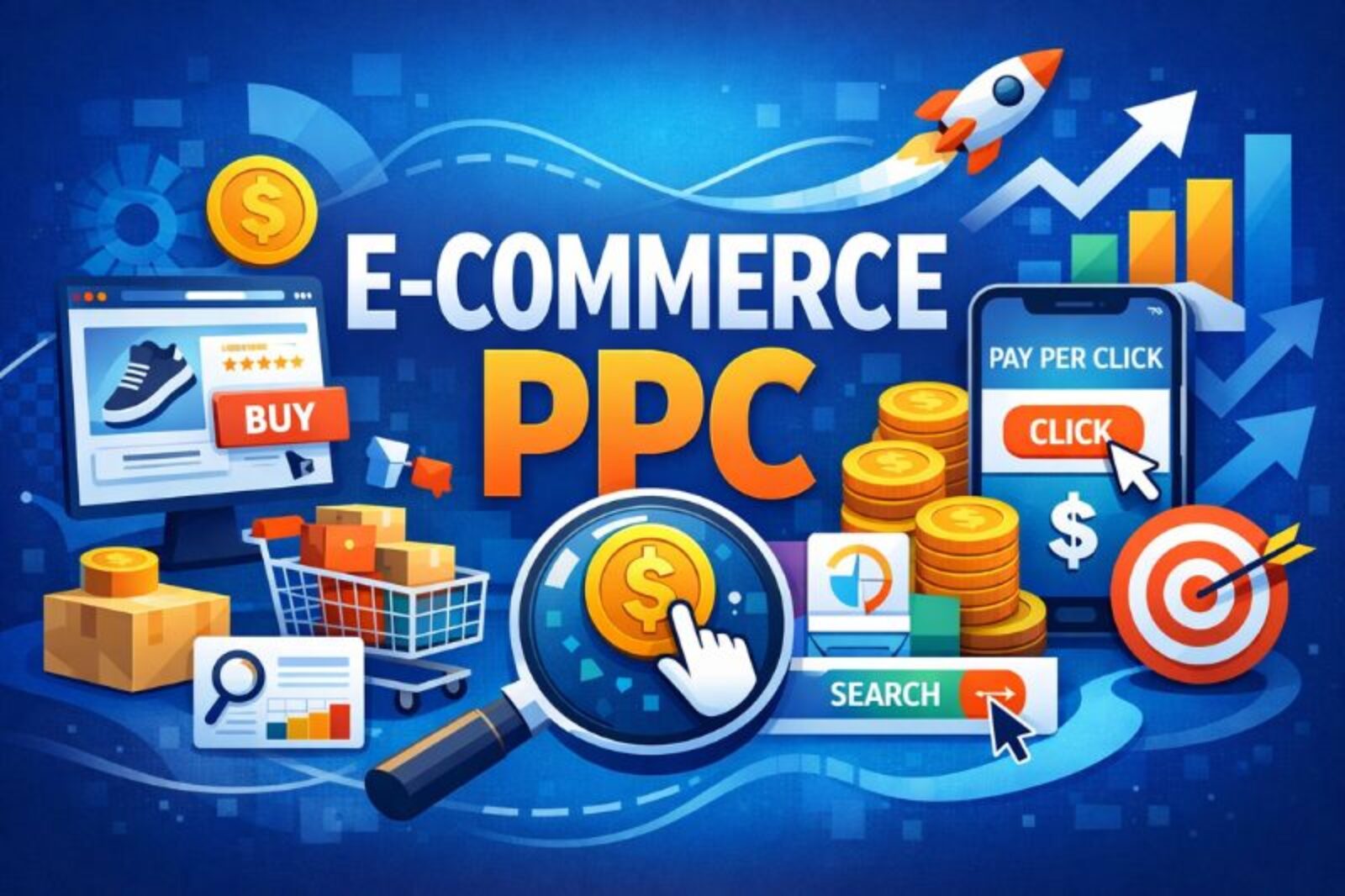
PPC is ideal for e-commerce since it puts your products in front of shoppers when they’re ready to buy. According to industry research, search advertising attracts some of the most intent-driven traffic online, and customers who click on paid ads are substantially more likely to convert than casual surfers. In fact, e-commerce firms that employ PPC have faster revenue growth since advertisements appear when users are actively searching for “buy,” “price,” or “near me” searches.
Unlike other channels, PPC allows you to manage every dollar, set daily budgets, halt quickly, and scale just what is lucrative. For online companies that rely on constant sales, quickness, and demonstrable ROI, no channel provides more immediate and predictable results than e-commerce PPC.
Not all advertising platforms produce the same results for online retailers. Some outlets are better for brand recognition, while others are designed to drive actual transactions. For most e-commerce firms, long-term PPC success stems from selecting platforms that attract high-intent shoppers and convert clicks to revenue.
Not every advertising platform delivers the same results for online stores. Some channels are better for brand awareness, while others are built for driving real purchases. For most ecommerce businesses, long-term PPC success comes from choosing the platforms that capture high-intent buyers and turn clicks into revenue.
Over 1.2 million businesses actively use Google Ads worldwide, and approximately 96% of brands allocate a portion of their marketing budget to the platform. Google. A significant majority of e-commerce businesses use Google Ads, with estimates suggesting that around 65% of small and mid-sized businesses globally rely on the platform for their pay-per-click (PPC) campaigns. Ads account for around 80.2% of the global PPC market, making it the leading channel for paid search advertising. Approximately 90% of consumers report that online ads influence their buying decisions, and 43% make a purchase after seeing a Google Ad. Google Ads is the best PPC platform for brands that sell on their own website, whether you’re using Shopify, WooCommerce, or a custom-built store.
Search Ads: Ads appear when users enter high-intent terms such as “buy running shoes online” or “best protein powder.”
Shopping Ads: Display your product image, price, and brand directly on the Google results page.
Performance Max: Using Google’s AI, you can promote your products across Search, Shopping, YouTube, Display, and Gmail with a single campaign.
DTC Brands
Google Ads is an ideal platform for direct-to-consumer marketers. It enables you to direct traffic to your website, manage the full customer journey, and establish long-term brand equity while earning immediate revenue. You own the information, the relationship, and the recurring business.
Niche Products
If your product solves a specific problem or caters to a certain group, Google Ads allows you to contact purchasers at the exact time they search for that answer. Instead of broadcasting to everyone, you appear just when intent is highest, making it ideal for niche ecommerce stores.
High-margin Items
High-margin products, Google Ads allows you to bid competitively without sacrificing profitability. By focusing on high-intent keywords and optimizing for ROAS, you may increase revenue while keeping costs under control, perfect for premium, specialist, or high-value products.
As of 2025, Amazon has over 9.7 million registered sellers worldwide, with around 2 million active sellers battling for visibility every day. More crucially, independent sellers now account for more than 60% of all Amazon sales, with the majority being small and medium-sized firms. This means that Amazon is no longer just dominated by large companies; it is now a battleground where growing e-commerce enterprises may compete.
Sponsored Products
Promote specific product listings in search results and product pages. These ads promote direct sales and are the foundation of every Amazon PPC strategy.
Sponsored Brands
Display your brand’s logo and various products at the top of search results. Ideal for increasing brand awareness and directing shoppers to your product catalogue.
Sponsored Display
Use Sponsored Display to retarget shoppers on and off Amazon, depending on their browsing behaviour. Ideal for recapturing interested buyers and appearing on competition product pages.
The best PPC platform depends on where your sales take place. If you sell on your own website, whether it’s based on Shopify, WooCommerce, or a bespoke platform, Google Ads is your growth engine. It directs high-intent shoppers to your store, provides you with complete control over the customer experience, and enables you to establish a long-term brand outside of any particular marketplace.
If Amazon is your principal sales channel, you should focus on Amazon Ads first. Your customers are already there and eager to buy. Amazon PPC helps your products appear in search results and competition pages, converting visibility into everyday sales inside the marketplace.
For brands aiming for omnichannel scale, combining the two provides the most power. Google Ads generates demand and brand awareness across the internet, whereas Amazon Ads converts that demand at the point of sale. They work together to establish a comprehensive e-commerce PPC system that drives long-term success across all channels.
Google E-commerce PPC campaign is not about ad creation; it is about building a clean foundation, so every click can be tracked, optimized, and scaled profitably. Let’s go deeper into how you can create Google E-commerce PPC to increase your online sales and maximise your ROI! But if you’d prefer expert support, explore our Google Ads management plans or get in touch with BeOnAds to begin your 7-Day Google Ads Free Trial.
Create a Google Ads account
Begin by creating a Google Ads account and connecting it to your business email. This will be your primary dashboard for controlling budgets, campaigns, keywords, and performance metrics.
Set up Google Merchant Centre
Google Merchant Centre is where your product data is stored. Upload your product feed, including title, image, price, and availability. This step is required for conducting Shopping Ads and Performance Max campaigns.
Set up conversion tracking
Without tracking, PPC is simply guessing. Set up conversion tracking to track transactions, revenue, and critical actions on your website. This enables Google’s algorithm, and you, to determine what is actually driving purchases.
Launch your first campaigns:
Begin with these three main campaign types:
Search Campaigns: Target high-intent keywords such as “buy,” “price,” and “best.”
Shopping Campaigns: Display your products graphically in Google’s shopping results.
Performance Max: Use Google’s artificial intelligence to promote your products across Search, Shopping, YouTube, Display, and Gmail with a single campaign.
Structure by Product Category
Instead of combining all campaigns, organize them by product category. This allows you better budget control, more accurate performance statistics, and easier scaling for your best-selling products.
Add negative keywords
Negative keywords keep your ads from appearing in unrelated searches. This protects your budget, increases click quality, and ensures a good ROAS from day one.
That’s it! No. Most importantly, you need to analyse whether you are successfully scaling your Google e-commerce PPC campaigns. Anyone can create an e-commerce ppc campaign, but scaling those campaigns is challenging.
But at BeOnAds, we don’t just manage PPC campaigns; we scale them.
We optimise for Return on Ad Spend (ROAS), not just for traffic. We believe that while traffic is important, it is profit that truly grows an e-commerce business. Focus on key commercial metrics like ROAS, conversion rate, and revenue per click. If you would like expert support, explore our e-commerce PPC management plans or get in touch with BeOnAds to begin your 7-day free e-commerce PPC trial.
Amazon PPC is all about getting your products in front of buyers who are already in the “purchase mode.” The appropriate configuration enables you to gain attention, make consistent sales, and enhance organic ranks in the marketplace.
Prepare Your Foundation
Before you spend a single dollar on Amazon marketing, be sure your foundation is sound. Amazon PPC simply amplifies what already exists, so if your listing is inadequate, your ad expenditure will be ineffective. Make sure each product has a clear, keyword-rich title, high-quality photographs that display the product from all angles, and bullet points that highlight real customer benefits rather than just features. Your pricing should be competitive in your industry, and ideally, you should already have a few reviews to establish trust. On the account side, having Brand Registry (highly recommended), a Professional Seller Account, and enough inventory on hand is critical. When these fundamentals are in place, your advertising can perform as intended, increasing visibility, conversions, and profit growth. Once your foundation is ready, access the Amazon Ads Console by logging into your Seller Central account.
Choose the Right Campaign Types
Amazon provides four primary options to advertise your products:
Automatic Campaigns: Amazon finds search phrases and placements for you. Ideal for discovery and keyword mining.
Manual Keyword Targeting: You select specific keywords to determine where your adverts show.
Product Targeting: Display advertisements on competitor product pages and certain categories.
Harvesting Keywords
After a few days of running your automatic campaigns, you’ll start collecting real search data from buyers. This is when you shift into control mode by creating manual keyword campaigns. Use the keywords that generated clicks and sales in your auto campaign search term reports, along with suggestions from Amazon’s search bar. Add high-intent terms as Exact match for precision and use Phrase match to scale into closely related searches. Start with slightly lower bids than your auto campaigns and organize keywords into separate ad groups by match type. This structure gives you better control, cleaner data, and a clear path to improving performance while scaling what works.
Optimize Bidding
As performance data accumulates, bidding becomes your primary growth lever. Increase your bids on high-converting keywords and low-ACOS terms to get more profitable traffic. At the same time, cut bids on keywords that cost a lot of money but don’t generate sales. Separate your bids for top-of-search and product page placements so you can invest more where conversions are highest and withdraw where returns are low. This guarantees that you’re spending more for what works and less for what doesn’t, keeping your Amazon PPC competitive and lucrative.
Scale What Works
Once your efforts have proven profitable, it’s time to scale with intent. Increase daily budgets for winning campaigns so they are not constrained by spending. Expand into additional keyword variations and add new ASIN targets to grab more purchasing opportunities. At this point, use Sponsored Brands to increase visibility across search and direct shoppers to your catalog, and Sponsored Display to retarget visitors who looked at your products but did not buy. Finally, defend your area by bidding on your own brand keywords and safeguarding your product pages against competitors. Scaling is not about spending more money; it is about investing more in what is currently lucrative.
Running E-commerce PPC without tracking the correct KPIs is equivalent to driving blindly. Profit, not clicks and impressions, is what drives an online business forward. Whether you’re advertising on Google or Amazon, these are the essential KPIs any store owner should know:
ROAS (Return on Ad Spend): Measures how much income you generate for every dollar invested. A ROAS of 4 represents $4 in sales for every $1 in advertising. This is your key profit metric.
ACOS (Advertising Cost of Sales): The inverse of ROAS, utilized mostly in Amazon PPC. An ACOS of 25% indicates that you spent $25 to generate $100 in sales. Lower is preferable.
CPC (Cost each Click): The amount you pay for each click. Rising CPCs might cut profits if conversions do not improve.
AOV (Average Order Value) is the average amount clients spend per order. Higher AOV allows you to bid more aggressively.
Successful e-commerce firms do not grow by luck; instead, they base all of their marketing decisions on five basic pillars. These are known as the 5 C’s of E-commerce, and PPC plays a direct part in enhancing each of them.
Customer
Everything begins with understanding your customer. PPC allows you to approach buyers based on their actual intent – what they search for, what they see, and what they’re willing to buy. Instead of guessing, you target those who are actively seeking the solutions your product offers.
Content
In e-commerce, your advertisements and classifieds serve as your content. PPC places your product photos, headlines, and offers in front of the appropriate audience. Strong ad copy and polished product pages boost relevancy, click-through rates, and conversions.
Convenience
Modern customers want quickness and simplicity. PPC shortens the purchase journey by putting your product in front of buyers when they need it, whether it’s in Google search results or on an Amazon product page. Fewer steps equals fewer drop-offs.
Cost
PPC allows you to completely control your spending. You choose how much to invest, where to invest, and when to scale or pause. With simple measurements like ROAS and ACOS, every dollar can be monitored and managed for profitability.
Communication
PPC ensures your brand’s visibility and consistency. Remarketing, brand promotions, and product ads help you stay top-of-mind throughout the buyer journey. Even before the sale, each impression reinforces trust and recognition.
When PPC is linked with the 5 C’s, it becomes more than just advertising; it is a growth mechanism based on how real customers buy.
In 2026 and beyond, winning brands will be those that blend strategy, data, and AI with human understanding. Anyone can start a campaign, but scaling it economically requires structure, experience, and ongoing optimization.
If you’re ready to transform PPC into a meaningful cash generator for your e-commerce business, BeOnAds can assist. We don’t just manage campaigns; we scale them. Because e-commerce makes it simple to purchase traffic. The most important factor is profitable expansion.
Hello Doctor!If you’re here, you’re not just exploring Google Ads. You’re looking for real, result-driven Google Ads strategies to increase

If you run an online store and want to generate daily sales to boost your revenue, listing your products on
Pay-Per-Click (PPC) advertising offers a powerful strategy for accelerating online business growth. If your goal is to expand your online


work@beonads.com

India, West Bengal
We help businesses scale smarter, faster, and profitably through strategic & data-driven advertising across the world’s biggest platforms.
© 2026 – BeOnAds. All Rights Reserved.