


Lead Generation

Google Ads for Dental Clinics – How to Get More Patients in 2026
Hello Doctor!If you’re here, you’re not just exploring Google Ads. You’re looking for real, result-driven Google Ads strategies to increase

If you run an online store and want to generate daily sales to boost your revenue, listing your products on Amazon is a great start. But that’s just the beginning! Amazon is one of the largest and most effective marketplaces in the world for growing your business. However, it’s crucial to have a strategic approach to your product presence on Amazon. Your Amazon advertising campaigns should be well-structured and data-driven. Running Amazon PPC (Pay-Per-Click) ads without a clear strategy is like driving without a map.
As of 2025, there are over 9.7 million registered sellers on Amazon, with around 2 million active sellers competing for visibility daily. If you want to enter this competitive arena, you need to be well-prepared and equipped to succeed.
In this blog, we not only explain what Amazon PPC is, but we also cover essential factors such as how to set it up, the latest trends, best automation tools to use in 2026, how to leverage AI in your Amazon PPC marketing, and the challenges many sellers face regarding PPC and how to overcome them.
Isn’t that interesting? Let’s dive deeper into how you can use Amazon PPC to increase your online sales and maximize your ROI. If you would prefer expert assistance, consider exploring our Amazon PPC management plans or contact BeOnAds to start your 7-day Free Amazon PPC trial.

Amazon PPC (Pay-Per-Click) is Amazon’s performance-driven advertising system that enables sellers to promote their products across the marketplace while paying only when a shopper clicks on their ad. Rather than depending solely on organic rankings, sellers bid on relevant keywords and placements, allowing their products to appear in high-visibility positions such as search results, competitor listings, and product detail pages – precisely at the moment shoppers are actively searching for products like yours.
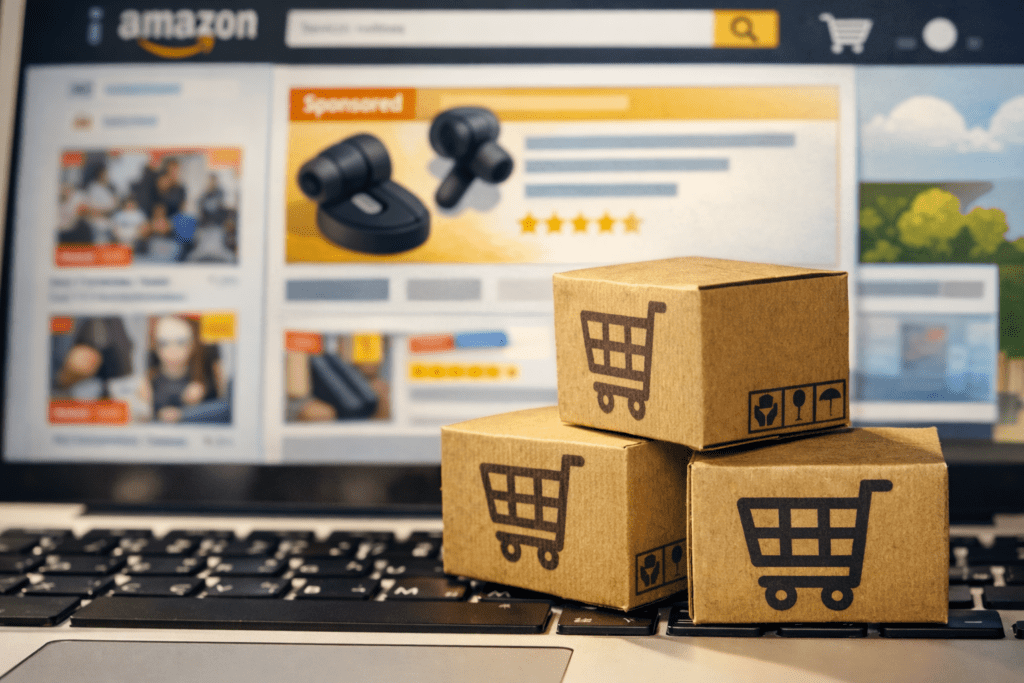
Amazon Marketplace
This makes Amazon PPC one of the most powerful growth levers on the platform, placing your listings in front of high-intent buyers and turning demand into measurable, scalable sales.
The days of fragmented Amazon PPC Ads are over. The new landscape is a unified, AI-driven powerhouse where Performance+ automation connects brands to audiences across multiple devices. Crucially, Amazon is prioritizing transparency, using AI to turn raw data into a clear window into customer behaviour.
The Power of AI and Automation: Advanced tools such as Performance+ and Brand+ have transformed amazon ppc campaign management. By automating setup and optimization across display, video, and audio channels, these solutions use Amazon’s vast data pool to improve targeting while significantly reducing manual labour.
Omnichannel Expansion: Amazon’s PPC advertising reach now extends well beyond the retail site, offering a decisive competitive edge. Marketers can now manage cohesive campaigns that span Amazon’s proprietary apps, Fire TV, and IMDb, as well as an expansive network of third-party partners, ensuring a seamless brand experience wherever the audience is.
From Black Box to Crystal Box: With the launch of Amazon Ads Agent in 2026, the “black box” will become transparent. Advertisers now receive natural-language explanations for AI-driven performance, allowing them to move beyond setup and focus on mastering the “strategy levers” – the controls that guide how AI navigates complicated customer behaviours across the whole funnel.
By 2026, Amazon PPC (Pay-Per-Click) has progressed from a “marketing option” to the literal fundamental nervous system of the Amazon corporation. With the market more congested than ever, PPC is the major driver of visibility, data, and long-term organic growth.
Instead of simply waiting for a consumer to type a specific product name into the search bar, a full-funnel approach leverages Amazon’s massive ecosystem to remain top-of-mind. At the top of the funnel (Awareness), you may use Sponsored TV or video ads on Prime Video and Fire TV to reach relevant consumers when they are relaxed and open. As consumers progress down the funnel (Consideration), Sponsored Display advertising can retarget the same viewers or appear on competitor listings, gently reminding them why your product is the best option. Finally, at the bottom of the funnel (Conversion), traditional Sponsored Products advertising ensures you own the “digital shelf” when the shopper is ready to buy.

We help businesses scale smarter, faster, and profitably through strategic & data-driven advertising across the world’s biggest platforms.



Amazon PPC (Pay-Per-Click) is a performance-based advertising strategy that lets sellers place their products in front of shoppers at the exact moment they are looking for what they sell. Rather than paying for impressions, marketers are only charged when someone clicks on their ad, making PPC more quantitative and results-oriented.
At its core, Amazon PPC functions as an auction mechanism. Sellers select relevant keywords or product targets and establish a maximum bid – the amount they are ready to spend when a customer clicks on their ad. When a buyer searches on Amazon, the auction determines which ads appear and in what positions. However, it is not only about the highest bid:
Amazon also considers ad relevancy.
The anticipated click-through rate (CTR)
And even your product’s past performance.
This means that a well-optimized product with high relevance and performance can outperform a higher offer that is less relevant.
The analysis reveals that by 2026, Amazon PPC will be the main force in retail media, rather than just an auxiliary sales tool. The following are the core market figures and trends for 2025-2026, as indicated in prominent industry surveys.

AI Automation – Amazon Advertising
Amazon and third-party platforms are increasingly adopting machine learning to automate bid adjustments, budget allocation, and even keyword suggestions, decreasing the need for manual PPC administration and allowing for real-time optimization. In 2026, you will no longer spend hours adjusting bids or harvesting keywords. Instead, you will interact with the Amazon Ads Agent.
Example: You can now give high-level instructions like, “Increase my visibility for eco-conscious shoppers while maintaining a 20% ACoS,” and the AI handles the execution.
Streaming TV (STV) on Prime Video is no longer limited to large brands. Small and medium sellers can now use Performance+ to run video ads that are directly shoppable. A viewer can add your product to their cart while watching a movie by clicking the remote or scanning a QR code.
With new AI-driven workflows, you can start a single campaign that allocates funding across search, video, and display based on the greatest conversion probability in real time.
Amazon’s AI now predicts intent based on trillions of data points, including Alexa questions and Whole Foods transactions. It can display your ad to a customer who is likely to require your product, even if they haven’t yet searched for it.
Ads on platforms such as Fire TV have become increasingly relevant to the content being watched. If a character is cooking in a show, the AI may advertise your kitchen gadget during the pause menu, complete with real-time local pricing.
Video advertising, particularly brief video advertisements, is quickly increasing in popularity. They frequently get higher engagement and conversion rates than static images.
In 2026, starting up an Amazon PPC campaign is more than just bidding on keywords; it’s also about training the AI. With the introduction of the Amazon Ads Agent and the extension of Performance+, the technological “grunt work” has been automated, freeing you to focus on high-level brand strategy.
Here is your master guide to setting up and winning with Amazon PPC in the current 2026 landscape.
Before you use the advertising console, make sure your product listings are AI-ready. In 2026, Amazon’s algorithm will prioritize “contextual relevance” over mere keyword stuffing.
Visual Assets: Ensure you have at least one AI-generated video (using the new Video Generator tool). Video now accounts for over 35% more conversions than static images.
The “Rufus” Check: Amazon’s new conversational AI, Rufus, suggests products by understanding the details of features and customer needs. To stay visible in these recommendations, your listing must clearly answer why your product is better.
Instead of generic bullets, write benefit-driven points that respond to real buyer questions, such as:
“Why is this safe for sensitive skin?”
“Why does this last longer than others?”
When your bullet points explain these “why” factors clearly and simply, Rufus can more accurately match your product to shopper intent, giving you an edge in AI-driven discovery.
Stock Levels: Never start a campaign with a limited inventory. In 2026, the AI will automatically reduce your ad distribution if it forecasts a stock-out within 14 days to protect your rating.
The best way to structure your amazon ppc account in 2026 is the “Funnel-First” approach. Don’t just launch one campaign; launch an ecosystem.
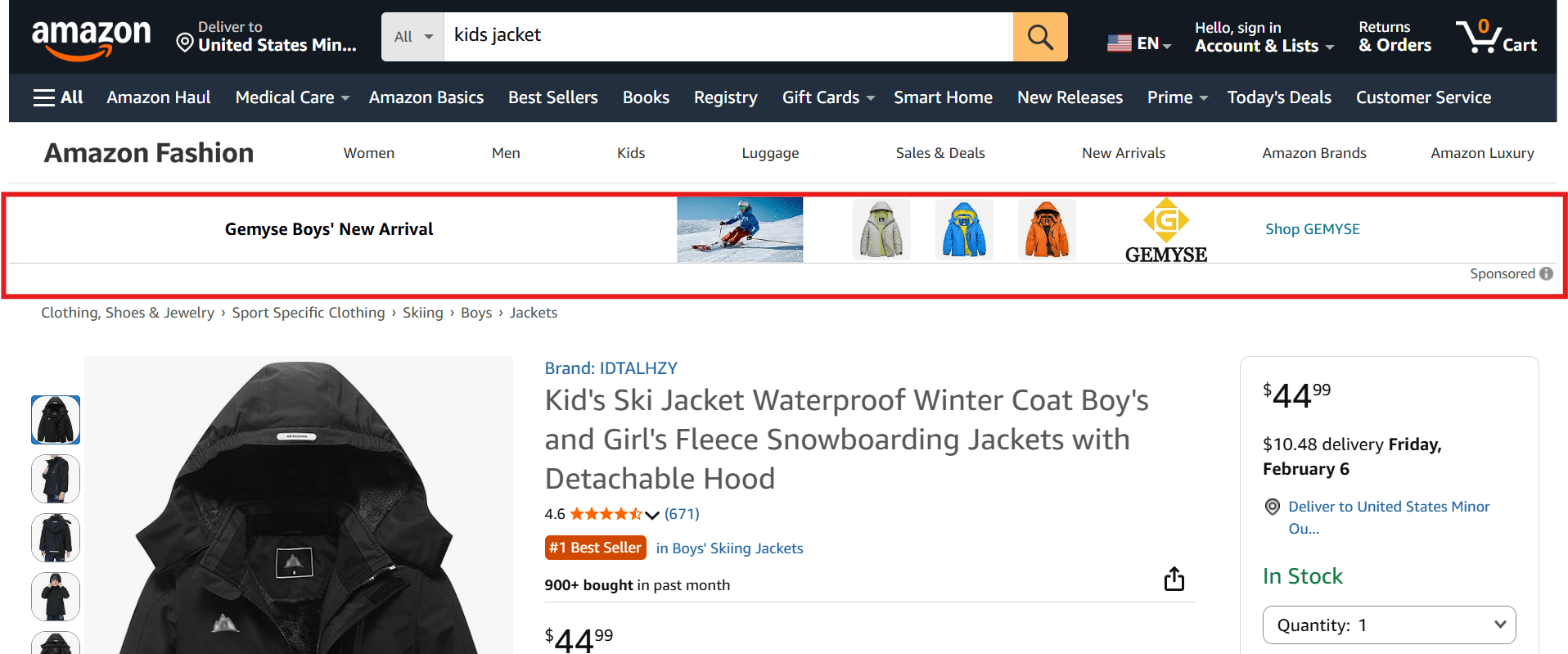
Sponsored Products ads appear in search results and product listing pages, and they can look very similar to organic listings. This is the most prevalent sort of Amazon PPC ad, accounting for 66% of third-party merchants.
In 2026, Sponsored Products will remain the “bread and butter” of Amazon PPC advertising. However, the setup process has grown into a collaborative effort between your brand strategy and Amazon’s AI. Follow these simple steps to successfully launch your first campaign.
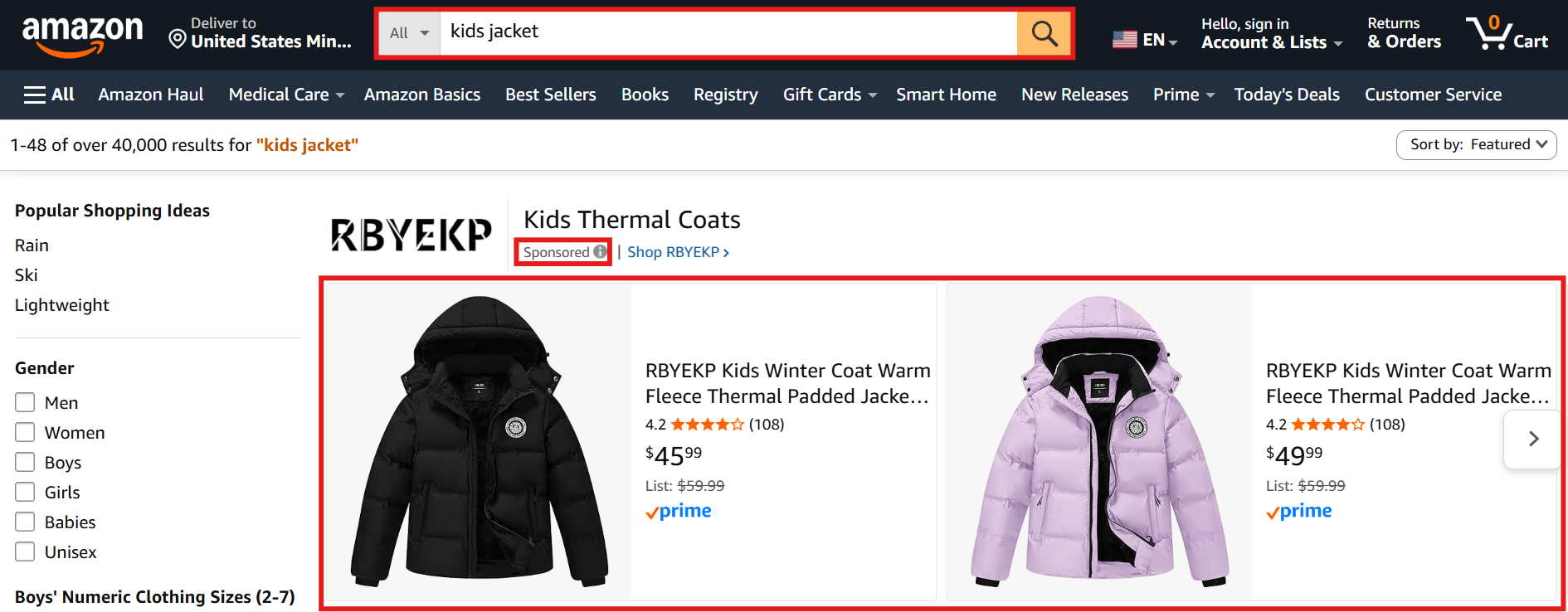
Amazon Sponsored Product Campaign
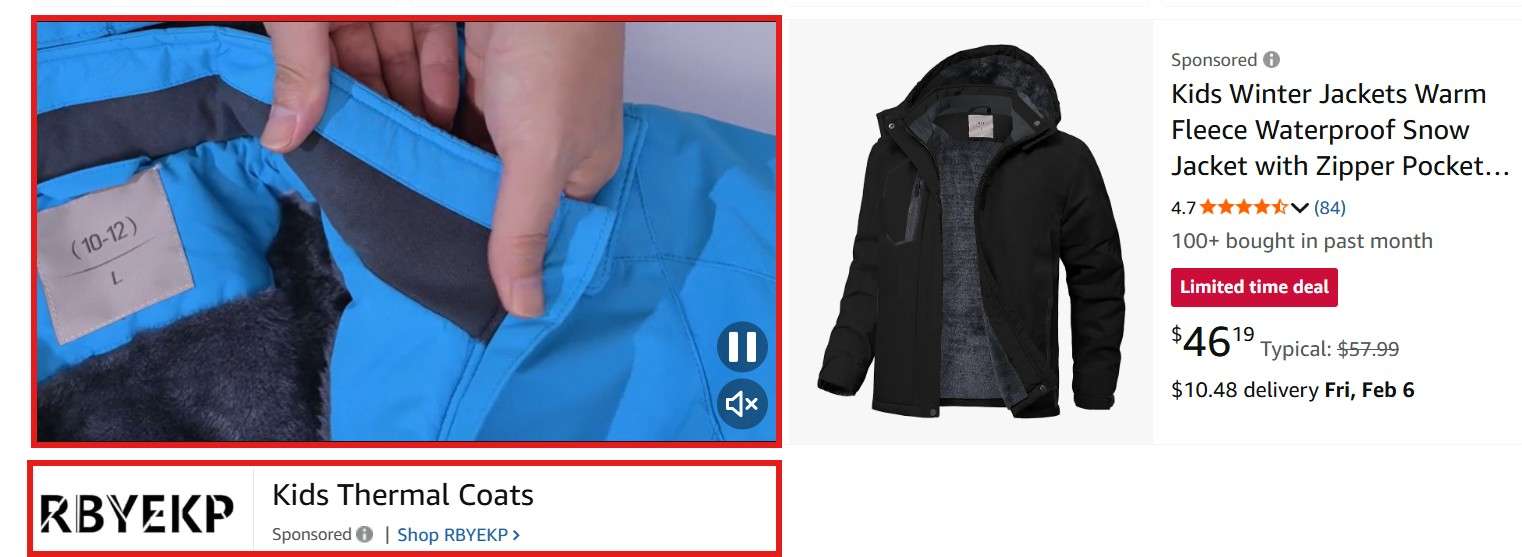
Sponsored Brands Video (SBV) advertising on Amazon is an effective approach to gain attention. These short, auto-playing videos appear directly in search results and are triggered by keywords that customers are already searching for.
As a result, SBV ads typically receive 5-7 times more hits than other ad formats. They capture attention quickly, make your brand more memorable, and typically generate visitors at a lower cost per click, while still converting better than traditional advertisements.
Simply put, SBV advertising makes your products stand out, increases clicks, and converts more shoppers into purchasers.
Sponsored Brands advertisements, like Sponsored Products and Sponsored Display ads, are a type of PPC advertising in which you bid against other sellers on various keywords in order to acquire impressions from potential buyers. As the seller, you can set your bids for each term as well as your campaign’s daily budget.
In the Amazon ecosystem of 2026, Sponsored Display (also known as Display Ads) is your most potent tool for “recapturing” lost purchases. While Sponsored Products awaits a search, Sponsored Display follows the customer, displaying your advertisements on rival pages, Amazon’s homepage, and even third-party apps and websites.
In 2026, the Amazon PPC environment will no longer be limited to keyword bidding; it will also include data efficiency management. To be profitable, you must look beyond “total sales” and begin analyzing the factors that genuinely drive growth.

Here are the essential Amazon PPC metrics you must analyze and optimize to maintain a competitive edge.
ACoS’s “Efficiency” Metric assesses how much you spent on advertising in relation to the revenue generated by those adverts.
To calculate your Advertising Cost of Sales (ACoS), divide the amount you spent on ads by the revenue they generated, then multiply by 100.
ACoS = (Ad Spend ÷ Ad Sales) × 100
This gives you a clear percentage showing how much you’re spending on ads to earn each dollar in sales.
Your “target ACoS” should be based on your objectives. For a product launch, an ACoS of 40-50% may be sufficient to achieve rank. For mature items, aim for an ACoS that is less than your profit margin (usually 15-25%) to ensure that every ad sale is profitable.
The “holistic health” metric In 2026, TACoS will be the most essential indicator for SEO. It compares your ad spend to your total revenue (organic and paid).
To calculate TACoS (Total Advertising Cost of Sales), divide your total ad spend by your total revenue (including both ad-driven and organic sales) and multiply by 100 to get the percentage.
TACoS = (Total Ad Spend / Total Revenue) × 100
The “holistic health” metric In 2026, TACoS will be the most essential indicator for SEO. It compares your ad spend to your total revenue (organic and paid).
Decreasing TACoS: Your ads are boosting your organic rank; this is the goal!
Increasing TACoS: You are becoming “ad-dependent.” If TACoS is rising, you need to optimize your listing SEO (titles/bullet points) to improve organic conversions.
The “Profitability” Metric: The inverse of ACoS, ROAS tells you how many dollars you earned for every $1 spent.
Return on Ad Spend (ROAS) measures how much revenue your ads generate compared to what you spend on them.
ROAS = Revenue/Cost
It’s calculated by dividing the total revenue from a campaign by its total ad cost, and is usually shown as a ratio (like 5:1) or a percentage (such as 500%), indicating how many dollars you earn for every dollar you invest.
A ROAS of 4.0 or greater is often considered healthy. In the 2026 “Crystal Box” scenario, leverage Ads Agent data to determine which precise placements (Top of Search vs. Product Pages) are providing the highest ROAS and allocate your spend accordingly.
The “Growth” Metric is specific to Sponsored Brands and Display, and it tracks sales from customers who have not purchased from you in the previous 12 months.
In 2026, Amazon PPC has evolved into a high-stakes “pay-to-play” atmosphere. While the instruments are more powerful, the margin for error has diminished. To assist you in finalizing your master guide, here is a breakdown of the main difficulties and the specific “2026 Fix” for each.
The Challenge: As a result of enormous entry from big-brand aggregators and “algorithmic inflation” (in which AI tools drive up bids globally), the average CPC has reached $1.10-$1.25 in most categories.
The Solution is to narrow down your niche. Avoid pricey “Trophy Keywords” (e.g., “Kitchen Gadget”) in favour of Long-Tail Keywords (e.g., “Stainless Steel Garlic Press for Small Hands”). These have lower competition but a significantly higher aim.
The Challenge: Rising prices are reducing margins, making the traditional $2 generated for every $1 spent more difficult to maintain.
The Solution: Prioritize “Hero SKUs.” Stop allocating your budget to your complete catalogue. To maximize ROI, use your analytics to determine the top 20% of goods with the highest organic conversion rates and allocate 80% of your ad budget to them.
The Challenge: Many sellers discover that raising their budget boosts sales but reduces net profit because the expense of acquiring each new customer is too expensive.
The Solution: Monitor TACoS (Total ACoS). If your total ad spend is increasing faster than your total revenue (organic and paid), you are over-leveraged. Limit your ad expenditure to a percentage of your total income (preferably 8-12%) to ensure that ads promote organic growth rather than replacing it.
The Challenge: The 2026 auction takes place in milliseconds, based on trillions of data points. Humans can no longer alter their bids quickly enough to compete with AI-powered bots.
The Solution: Switch to “Hybrid Management.” Manually target your “Brand Defence” and “Top 10 Keywords,” but let Amazon’s Performance+ or Dynamic Bidding handle the hundreds of long-tail auctions where speed is essential to winning.
The Challenge: ACoS fluctuates wildly due to seasonal spikes and competitor price wars, making it hard to forecast monthly spend.
The Solution: Negative Keyword Ruthlessness. Audit your search term report weekly. Any keyword with more than 10 clicks and 0 sales should be added as a Negative Exact Match. This “plugs the leaks” in your budget and forces your ACoS to stabilize.
The Challenge: Sellers often feel they are losing control as Amazon moves toward automated campaigns that don’t show specific keyword data.
The Solution: The “Crystal Box” Strategy. Use the 2026 Amazon Ads Agent to extract natural-language reasons for why the AI is bidding on specific audiences. If the AI’s logic does not align with your brand’s aims, utilize “Negative Targeting” to direct the machine back on track.
Amazon PPC automation tools are now required because they bridge the gap between large datasets and practical judgments. These solutions use predictive modelling to alter bids based on hourly shopping trends (Dayparting), inventory levels, and even rival stock-outs; tasks that humans cannot handle across hundreds of ASINs. By delegating tedious optimizations like keyword harvesting and negative targeting to AI, sellers can shift their focus away from “firefighting” in the ad console and into high-level brand planning and creative development.
1. Helium 10 (Adtomic): The Data-Driven Choice
Helium 10 is a comprehensive AI-powered software suite for Amazon, Walmart, and TikTok Shop sellers that includes tools for product research, keyword research & optimization, listing generation, and inventory management. Key features include Black Box (product research), Xray (Chrome extension market analysis), Cerebro (reverse ASIN lookup), and Adtomic (AI-powered PPC management) to increase sales and efficiency.
2. Teikametrics (Flywheel 2.0): The Inventory-Aware Tool
Teikametrics (Flywheel AI) helps you run smarter ads on Amazon and Walmart. It automatically improves your ad campaigns so every dollar works harder for you. By using AI, it creates product-focused campaigns, adjusts targeting, and updates bids every hour to drive more sales and faster growth. Key 2026 Feature: Inventory-Sync Bidding. If your stock is running low, the tool automatically lowers your bids to prevent a stock-out, preserving your long-term organic ranking.
3. Quartile: The Enterprise Powerhouse
Quartile uses six proprietary machine-learning technologies to manage thousands of campaigns simultaneously. It is designed for high-volume sellers who need a tool that can process millions of data points every hour. Key 2026 Feature: Hourly Bid Adjustments. It reacts to competitor movements and price changes in real-time, ensuring you never overpay for a click.
4. BidX: The Rule-Based Hybrid
The platform combines smart AI automation with custom rules you control. This powerful mix lets you manage campaigns with precision, quickly cuts down wasted spend, and saves you from endless manual monitoring. Key 2026 Feature: Automated Keyword Harvesting. It instantly moves converting search terms from Auto to Manual campaigns based on your custom thresholds.
5. Perpetua: The “AI-First” Scaling Engine
Perpetua is an AI-powered advertising tool designed to assist e-commerce firms in scaling across key marketplaces. It uses real-time technology to automate and optimize marketing. In 2026, it remains a popular choice since it continuously improves your ads in the background; you pick your target, such as ACoS or awareness, and the AI handles the rest.
Speed and Precision: Algorithms respond quickly to changes in “Share of Voice,” ensuring you maintain top search position against competitive threats while offline.
Inventory Synchronization: Advanced technologies automatically reduce ad expenditure when inventory is low, shielding your organic ranking from the “out-of-stock” penalty.
Waste Reduction: AI discovers “bleeder” keywords (high traffic, 0% sales) far faster than manual reviews, allowing you to maintain profit margins in an era of growing CPCs.
Strategic Control: Rather than losing control, 2026 products provide “Guardrail Automation,” in which you specify the goals (e.g., Target ROAS) and the AI carefully adheres to your predefined business constraints.
As we move from 2025 into 2026, the days of guessing on Amazon are over. We’re now in a time where speed and efficiency matter most, buyers decide in seconds, and your product needs to be ready at that exact moment. The sellers winning today aren’t checking PPC once a week anymore. They treat it like a live control room, making constant, smart adjustments to stay ahead.
To win in this new environment, you need to think and act like a modern Amazon seller, one who follows these four core pillars:
Data-Driven: You don’t rely on gut feelings anymore. You use real data from tools like Amazon Marketing Cloud and live profit dashboards. You track TACoS as your main metric, making sure every ad dollar not only brings sales but also boosts your organic rankings.
Automated: You know the 2026 ad auction moves too fast for manual control. You let AI handle tasks like smart bidding, time-based adjustments, and pausing ads when stock is low, so you can focus on what machines can’t: creative strategy and building better products.
Profitable: You care more about real profit than flashy sales numbers. You track margins at the SKU level, cut high-traffic keywords that don’t make money, and use AI to defend your profits as CPCs rise.
Omnichannel-Aware: You understand that a buyer’s journey isn’t linear. It might start with a video ad, continue in mobile search, and finish with a retargeting click. So you build a full-funnel system that reaches customers wherever they are and guides them all the way to purchase.
If you would prefer expert assistance, consider exploring our Amazon PPC management plans or contact BeOnAds to start your 7-day free Amazon PPC trial.
Hello Doctor!If you’re here, you’re not just exploring Google Ads. You’re looking for real, result-driven Google Ads strategies to increase

If you run an online store and want to generate daily sales to boost your revenue, listing your products on
Pay-Per-Click (PPC) advertising offers a powerful strategy for accelerating online business growth. If your goal is to expand your online


work@beonads.com

India, West Bengal
We help businesses scale smarter, faster, and profitably through strategic & data-driven advertising across the world’s biggest platforms.
© 2026 – BeOnAds. All Rights Reserved.